
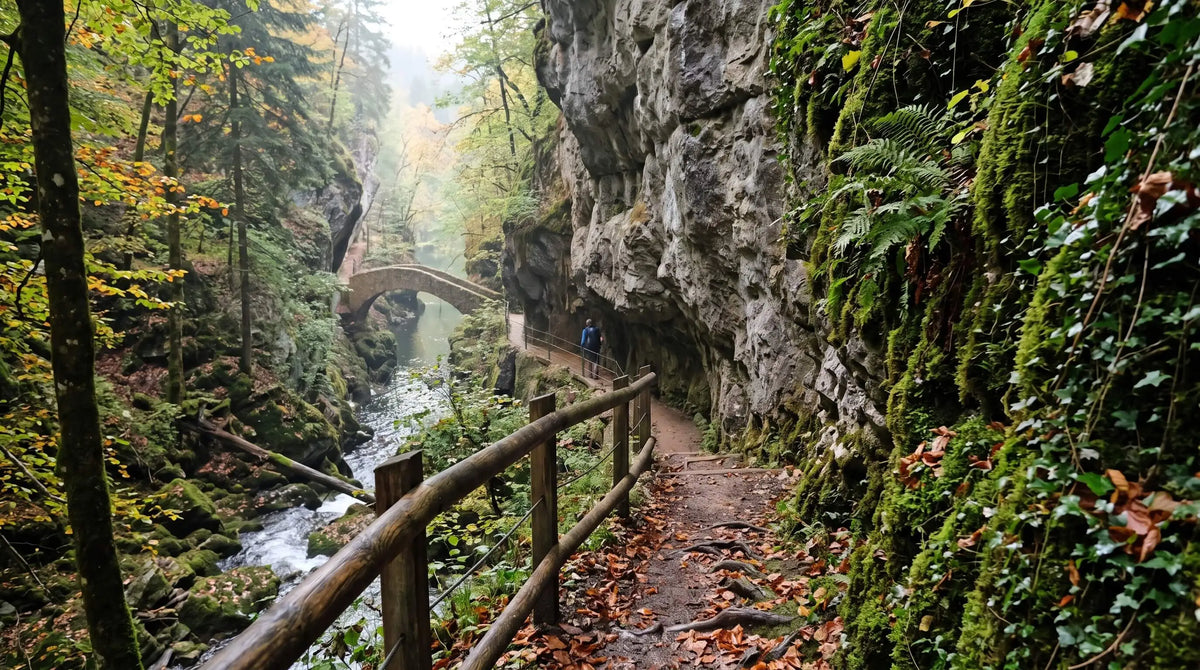
WWF Switzerland has just published four interactive maps showing where pesticides were detected in the country's rivers and groundwater between 2019 and 2024. Swiss water has an excellent reputation, and largely deserves it. But this data is a reminder of a simple fact: what is sprayed on fields often ends up in water, and some substances stay there for years after being banned.
Four maps that make an invisible problem visible
The WWF platform has four maps: two for rivers and streams, two for groundwater. For each type of water, one map gives an overview and the other lets you follow a specific substance year by year.
WWF did not take its own measurements. It processed the raw data from the two national monitoring programmes run by the Federal Office for the Environment (FOEN) together with the cantons:
- NAWA for rivers and streams, where pesticides have been monitored systematically since 2018
- NAQUA for groundwater, where 217 substances were analysed between 2019 and 2024
Click on a monitoring station to see the substances measured, their concentration and a three-colour rating of each substance's hazard to the environment, wildlife and human health.
Explore for yourself
The WWF maps: look up your area
Type in your town, click on a monitoring station and see which substances were detected there. A timeline lets you switch between years, from 2019 to 2024.
Or go straight to each map:
What the figures say
In rivers. National monitoring covers 36 sites analysed every year since 2019. Between 2019 and 2022, the number of times ecotoxicological limits were exceeded fell from just over 400 to just over 250. The trend is going in the right direction, but the level remains high. In January 2026, an Eawag study of five watercourses detected 135 different pesticides, with an average of 32 substances per sample.
The Wyna case. In autumn 2025, the canton of Lucerne measured a deltamethrin concentration in this river around 4,200 times higher than the risk threshold for aquatic organisms. This insecticide is highly toxic to fish and aquatic insects.
In groundwater. More than half of FOEN monitoring stations detect pesticide residues in groundwater. And groundwater supplies around 80% of drinking water in Switzerland.
The law. The Water Protection Ordinance currently sets binding ecotoxicological limits for only 19 pesticides. A revision is under way.
Chlorothalonil: banned since 2020, still there
Chlorothalonil shows that banned does not mean gone. This fungicide was used in Swiss agriculture from the 1970s and has been banned since 1 January 2020. In March 2026, the Federal Administrative Court upheld the ban.
The problem lies in its breakdown products, known as metabolites. Highly soluble in water and slow to degrade, they move from the soil into groundwater and stay there for a long time. According to the FOEN, seven chlorothalonil metabolites exceed 0.1 micrograms per litre in groundwater, in more than half of the cantons.
What about tap water?
The WWF maps show the state of rivers and groundwater. They do not measure the water coming out of your tap, as WWF itself points out.
Between the aquifer and your glass, water is tested and treated where necessary. The Federal Food Safety and Veterinary Office (FSVO) rates the overall quality of Swiss drinking water as good. At the same time, WWF estimates that around one million people on the Swiss Plateau drink water containing pesticide residues.
Know your water
To find out what your water contains, visit trinkwasser.ch or ask your water supplier for its test results. That is the first step before choosing a filtration solution.
What our filter removes, and what we cannot claim
We prefer to be clear. A water filter is not a universal solution, and we do not want you to believe otherwise.
The Coldstream FTO+ filter used in Pure Filters gravity systems was tested by the independent laboratory Envirotek to the NSF/ANSI 53 standard, on more than 70 pesticides and herbicides. Here are the results, including the substances our tests do not cover or that the filter removes poorly:
| Group | Substances | Measured reduction |
|---|---|---|
| Triazines | Atrazine, simazine | > 99.8% |
| Chloroacetanilides | Alachlor, metolachlor | > 99.8% |
| Acid herbicides | 2,4-D, dicamba | > 99.4% |
| Organochlorines | Dieldrin, DDT, chlordane | > 99.8% |
| PCBs | Polychlorinated biphenyls | > 99.8% |
| Fungicide (banned in 2020) | Chlorothalonil metabolites | Not tested |
| Pyrethroids | Deltamethrin | Not tested |
| Nitrates (not a pesticide) | Nitrates | 29.6% |
Source: Envirotek Laboratory LLC, report #19-69 (2019), NSF/ANSI 53 tests over 3,000 litres, twice the cartridge's rated capacity.
What our tests do not cover
Chlorothalonil metabolites and deltamethrin: these substances, at the heart of the WWF maps, are not included in our laboratory reports. So we cannot tell you what percentage the filter removes. Activated carbon does retain many organic compounds, but without a specific test, we prefer not to promise anything.
Nitrates: measured reduction of only 29.6%. Nitrates are ions that activated carbon does not retain. If your water contains a lot of them, a Pure Filters filter is not the right answer.
Actual performance can also vary depending on your water quality, its temperature and the age of the cartridge. The rule stays the same: replace the Coldstream FTO+ after 1,500 litres or about 6 months, whichever comes first.
Full results
All Coldstream FTO+ laboratory reports as PDFs, including what the filter does not reduce.
What you can do
- Look up your area on the WWF maps. In a few clicks, you can see whether monitoring stations near you detect pesticides.
- Ask for your drinking water test results. Your water supplier or municipality often publishes them online.
- Choose a filter based on your real needs. Compare what is in your water with what the filter has actually been tested to remove.
Frequently asked questions
Does boiling water remove pesticides?
No. Boiling kills bacteria but does not destroy pesticides. By evaporating some of the water, it can even concentrate them slightly.
Is bottled water a better option?
Not necessarily. Eawag researchers have already detected traces of chlorothalonil in a commercially sold mineral water.
Why are banned pesticides still found?
Some substances break down very slowly and take years to pass through the soil. Groundwater also renews slowly. So a ban takes a long time to show up in the measurements.
Does your filter remove chlorothalonil metabolites?
We do not have a laboratory test for these substances. So we cannot claim that it does. Our figures cover the pesticide groups listed above.
Key takeaways
- WWF has published four maps based on official NAWA and NAQUA data, from 2019 to 2024.
- Watercourses in farming areas of the Swiss Plateau remain heavily exposed, even though exceedances have fallen since 2019.
- Chlorothalonil metabolites are still present in groundwater, despite the 2020 ban.
- The maps describe water resources, not tap water, which remains under control.
- The Coldstream FTO+ reduces the tested pesticide groups by more than 99%, but our tests cover neither chlorothalonil nor deltamethrin, and it removes nitrates poorly.
Our commitment: to show you what our filters do, and also what they do not do. So that your choice is based on facts.
See the Coldstream FTO+ filter →
Sources: WWF Switzerland, pesticide maps for Swiss waters · FOEN, Chlorothalonil in groundwater · Eawag, pesticides in Swiss watercourses · VSA for the FOEN, Wirkung des Aktionsplans Pflanzenschutzmittel (2024) · SRF, deltamethrin in the Wyna · Envirotek Laboratory LLC, report #19-69 on the Coldstream FTO+ (CF163W)